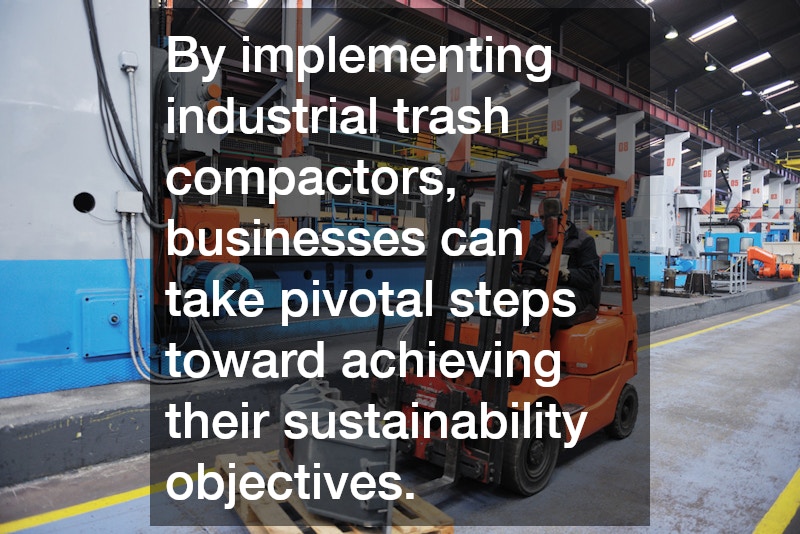
In a world increasingly focused on sustainability, businesses are under pressure to adopt practices that are environmentally friendly while enhancing their operational efficiency. One such solution that deserves particular attention is the industrial trash compactor. By compacting waste materials, these machines offer a means of reducing waste volume, cutting costs, and promoting recycling efforts.
Enhancing Waste Efficiency
One of the foremost benefits of using an industrial trash compactor is its ability to enhance waste efficiency significantly. By compressing waste into more manageable sizes, companies can decrease the frequency of waste collection services.
This translates into reduced emissions from transportation as fewer trips to landfills or recycling centers are needed. Such efficiencies are crucial in reducing a business’s overall carbon footprint.
In addition to fewer trips, compacted waste occupies less space, allowing more waste to be stored temporarily without expanding storage facilities. This can mean notable savings on storage costs over time and a tidier, more organized work environment, contributing to a company’s operational efficiency. It’s also important to note that minimizing the physical space required for waste management can allow for optimal use of available real estate in high-density zones.
Beyond tangible space and cost savings, enhanced waste efficiency from using industrial trash compactors reflects directly on a company’s strategic emphasis on sustainability. It demonstrates that a business is actively looking for solutions that harmonize with environmentally responsible practices. This proactivity in addressing waste issues with industrial trash compactors underscores a commitment to both ecological stewardship and efficient business operations.
Promoting Recycling
Industrial trash compactors also play a pivotal role in promoting recycling within organizations. By enabling waste segregation at the source, these machines ensure that recyclable materials are properly sorted and compacted, thus streamlining the recycling process. This separation ensures that recyclable items don’t end up in general waste bins, thereby increasing recycling rates and reducing contamination of recyclable batches.
Furthermore, the ability to compress recyclables tightly means fewer trips to recycling centers or facilities, which can directly impact a company’s logistics and transportation costs in a positive manner. This creates a more efficient recycling cycle that encourages regular recycling practices. It also ensures that a larger proportion of waste can be recycled, thus contributing to better resource management and conservation.
Recycling is not just a matter of compliance, but an opportunity to embrace sustainability as a comprehensive business approach. By deploying industrial trash compactors, companies not only contribute positively to global recycling goals but also witness improved sustainability in their operations. Creating a robust waste management strategy with a focus on recycling positions a company as a responsible, environmentally savvy player within its industry.
Reducing Costs
The financial benefits of industrial trash compactors further reinforce their value in achieving corporate sustainability goals. Initially, businesses might view these machines as a capital expense; however, they yield substantial returns in cost savings over time. By decreasing landfill waste, businesses often experience lower waste disposal fees, which can amount to considerable savings annually.
This cost reduction extends beyond mere waste disposal. With fewer collections needed, there is also a decrease in transportation costs, as well as the carbon footprint associated with those transportation cycles. Additionally, by maximizing waste efficiency and promoting recycling, companies can potentially tap into recycling rebate programs offered by various municipalities or environmental agencies.
Investing in an industrial trash compactor can also protect a business from fluctuating waste disposal costs due to regulatory changes or landfill taxes. These financial aspects add a compelling economic incentive to the decision-making process, ensuring that businesses can maintain their competitive edge while progressing toward sustainability. As such, compactors present both a pragmatic and economically astute choice for reducing waste and supporting green initiatives.
Lowering Environmental Impact
Perhaps the most compelling aspect of industrial trash compactors is their potential to significantly impact environmental conservation efforts. By reducing the mass of waste sent to landfills, these machines contribute to a decrease in greenhouse gas emissions – primarily methane – which arises from decomposing waste. This is critical in mitigating the effects of climate change and preserving ecosystems surrounding landfill sites.
In addition to minimizing emissions, the reduced number of trips to waste disposal sites as a result of using compactors directly correlates with lower fuel consumption. This, in turn, decreases air pollution, contributing to cleaner air quality and more sustainable urban environments. Thus, the environmental benefits of trash compactors extend far beyond immediate recycling efforts, offering long-term ecological restoration opportunities.
Through proactive environmental stewardship supported by the use of industrial trash compactors, companies can demonstrate a robust commitment to sustainable development. Not only does this build trust with stakeholders and customers who are environmentally conscious, but it also aligns corporate objectives with global sustainability goals. Ultimately, the environmental impact of these machines can play a significant role in creating a more sustainable and responsible global economy.
By implementing industrial trash compactors, businesses can take pivotal steps toward achieving their sustainability objectives efficiently and responsibly. Such initiatives do more than improve operations; they build a credible foundation for sustainable corporate success while contributing to a positive global environmental impact. Thus, industrial trash compactors are not merely operational tools but catalysts for sustainable change.